
Vintage Gemstone Jewelry: Why Antique-Inspired Pieces Stand Out
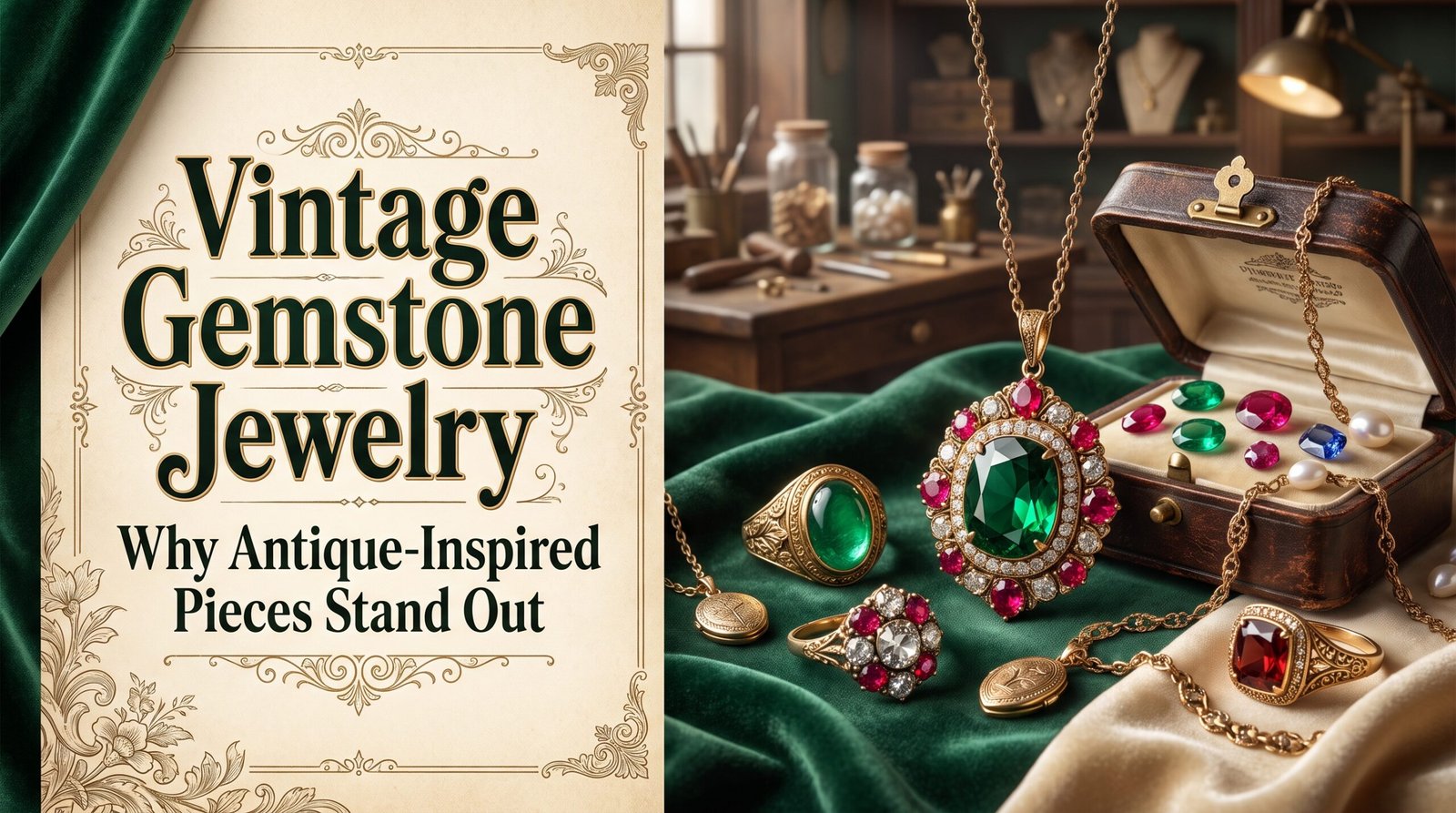
Something shifts when comparing modern pieces to vintage gemstone jewelry. Different energy. Different design philosophy. Vintage gemstone jewelry carries history. Actual decades or centuries of it. That context changes how pieces read visually.
Modern jewelry prioritizes uniformity. Mass-production efficiency. Consistency across pieces. Vintage gemstone jewelry existed in a completely different world. Artisans crafted individually. Each piece reflected personal style. Current design trends. Historical moment. That variation creates richness modern production can’t replicate.
Understanding why vintage matters requires understanding design evolution. How aesthetic preferences shifted. How craftsmanship techniques changed. How technological advances altered possibilities. That historical perspective explains why vintage pieces feel special beyond surface aesthetics.
Understanding Design Eras in Vintage Necklaces
Different time periods created distinctly different jewelry. Victorian era? Ornate. Dark metals. Symbolic meaning embedded everywhere. Art Nouveau? Curved lines. Nature inspiration. Flowing designs. Art Deco? Geometric. Streamlined. Mathematical precision.
Vintage necklaces from each era carry era-specific markers. Victorian vintage necklaces featured detailed metalwork. Intricate patterns. Heavy materials. Art Deco vintage necklaces emphasize bold geometry. Clean lines. Symmetry. Each era’s vintage necklaces tell stories about cultural values. Aesthetic preferences. Technological capabilities existing then.
Recognition of these differences matters. Vintage necklaces from different periods command different values. Different collector interests. Understanding era characteristics helps identify authenticity. Real vintage pieces align with historical patterns. Fakes typically miss period-specific details.
Old Stone Jewelry: Authenticity and Sourcing
Sourcing old stone jewelry requires understanding mining and availability history. Certain stones became available only after specific discoveries. Tanzanite? Discovered 1960s. Wouldn’t exist in truly old stone jewelry from earlier. That geological timeline helps verify authenticity.
Old stone jewelry from centuries ago featured stones from specific regions. Before global trade infrastructure, sourcing options limited dramatically. Rubies came from particular regions. Emeralds from specific locations. Understanding where stones originated helps dating old stone jewelry accurately.
Treatment methods shifted constantly. Modern gemology uses treatments old stone jewelry creators couldn’t access. Heat treatment became standard later. Oiling became common practice. Old stone jewelry typically shows minimal treatment. That’s actually evidence of age. Untreated stones suggest genuine antiquity.
Verifying Old Stone Jewelry Quality
Examination reveals authenticity. Old stone jewelry carries patina. Surface characteristics indicating age. Scratching patterns different from new jewelry. Metal wear is distributed naturally. That aging process can’t be faked successfully. Genuine old stone jewelry shows real wear patterns.
Documentation matters. Old stone jewelry with provenance. Certificates. Historical records. That documentation supports authenticity claims. Most old stone jewelry lacks perfect documentation though. That’s normal historically. Absence of papers doesn’t indicate forgery automatically.
Expert evaluation helps significantly. Old stone jewelry assessment requires specialized knowledge. Gemologists trained in period identification. Metallurgists understanding historical techniques. That expert analysis provides confidence. Worth investing in professional evaluation for valuable old stone jewelry.
Unusual Gemstone Jewelry: Breaking Contemporary Patterns
Unusual gemstone jewelry often appears in vintage collections. Stones are rarely used today. Combinations considered strange by modern standards. That “unusual” factor typically means historical authenticity. Modern production follows current preferences. Unusual gemstone jewelry represents different aesthetic moments.
Unusual gemstone jewelry featuring lesser-known stones indicates age frequently. Demantoid garnets. Alexandrite. Tourmaline varieties. These stones appeared prominently in vintage work. Fell out of favor later. Reappear in contemporary collections as rediscoveries. Unusual gemstone jewelry connecting past preferences to modern revivals.
Color palettes in unusual gemstone jewelry often shock contemporary viewers. Muddy greens. Brownish tones. Deep oranges. Modern production favors bright, saturated colors. Unusual gemstone jewelry shows preferences valuing different qualities. Depth. Subtlety. Muted elegance. That’s not better or worse. Just different cultural values.
Why Unusual Gemstone Jewelry Attracts Collectors
Scarcity drives interest. Unusual gemstone jewelry pieces become rare. Few survive. Fewer remain in perfect condition. That rarity creates collector demand. Investment potential. Unusual gemstone jewelry appreciates as supply diminishes constantly.
Historical significance matters too. Unusual gemstone jewelry represents moments in design history. Cultural moments. Artistic movements. Owning unusual gemstone jewelry connects wearers to past eras. That connection carries emotional weight. Investment value combines with historical value.
Why Vintage Stands Apart
Craftsmanship simply differs. Artisans creating vintage pieces possessed different training. Different tools. Different expectations about work quality. Modern production maximizes efficiency. Vintage production prioritized excellence. That philosophical difference shows in finished pieces.
Sustainability angles matter increasingly. Vintage gemstone jewelry requires no new mining. No environmental impact from extraction. Choosing vintage supports sustainability. Reduces demand for contemporary stone sourcing. That ethical dimension appeals to conscious consumers increasingly.
Limited availability creates automatic distinction. Vintage pieces exist in finite quantities. You can’t produce more. That finality matters. Unlike contemporary production capable of unlimited replication. Vintage automatically becomes exclusive simply through scarcity.
Conclusion
Vintage gemstone jewelry stands apart because it exists outside contemporary production systems. Historical design movements shaped pieces distinctly. Era-specific craftsmanship created unique characteristics. Vintage necklaces from different periods look completely different. That variation appeals enormously. Old stone jewelry carries authenticity modern replicas can’t achieve.
At Bonnie Gemstones, vintage appreciation means understanding historical context. Design evolution. Craftsmanship traditions. Each vintage necklace carries stories. Cultural moments. Artistic expressions from specific times. That historical richness explains why vintage remains relevant.
FAQs
How do I know if vintage necklaces are actually authentic vintage?
Examine metalwork techniques. Hand-forging marks indicate age. Check hallmarks and maker’s marks. Research design characteristics matching historical periods. Unusual gemstone jewelry with period-appropriate elements typically authenticates genuinely. Professional appraisals provide confidence for valuable pieces.
What makes old stone jewelry valuable compared to contemporary stones?
Age itself adds value. Rarity matters. Historical significance. Craftsmanship quality often exceeds modern production. Old stone jewelry frequently features superior gemstones. Ethical sourcing appeals. Investment potential. Multiple factors combine creating premium values.
Are vintage necklaces more durable than modern pieces?
Generally yes. Vintage necklaces often feature superior metalwork. Higher metal quality. Better stone securing techniques. Hand-crafted construction typically outlasts mass production. Though age itself can weaken pieces. Professional restoration exists for damaged vintage necklaces.
Can I wear vintage necklaces daily or should they be occasional pieces?
Depends on condition. Well-preserved vintage necklaces handle regular wear. Delicate or damaged pieces require careful occasional use. Insurance matters for valuable vintage necklaces. Professional maintenance preserves longevity. Most vintage necklaces survive better through gentle regular wear than storage.
How do I find authentic vintage necklaces without getting scammed?
Purchase from reputable dealers. Request certificates. Examine detailed photos. Ask about provenance. Buy unusual gemstone jewelry only with documentation. Online purchases need clear return policies. Professional authentication available. Educate yourself about period characteristics. Trust instincts about seller legitimacy.