
Precious vs Semi-Precious Stones: Understanding Jewelry Gemstones
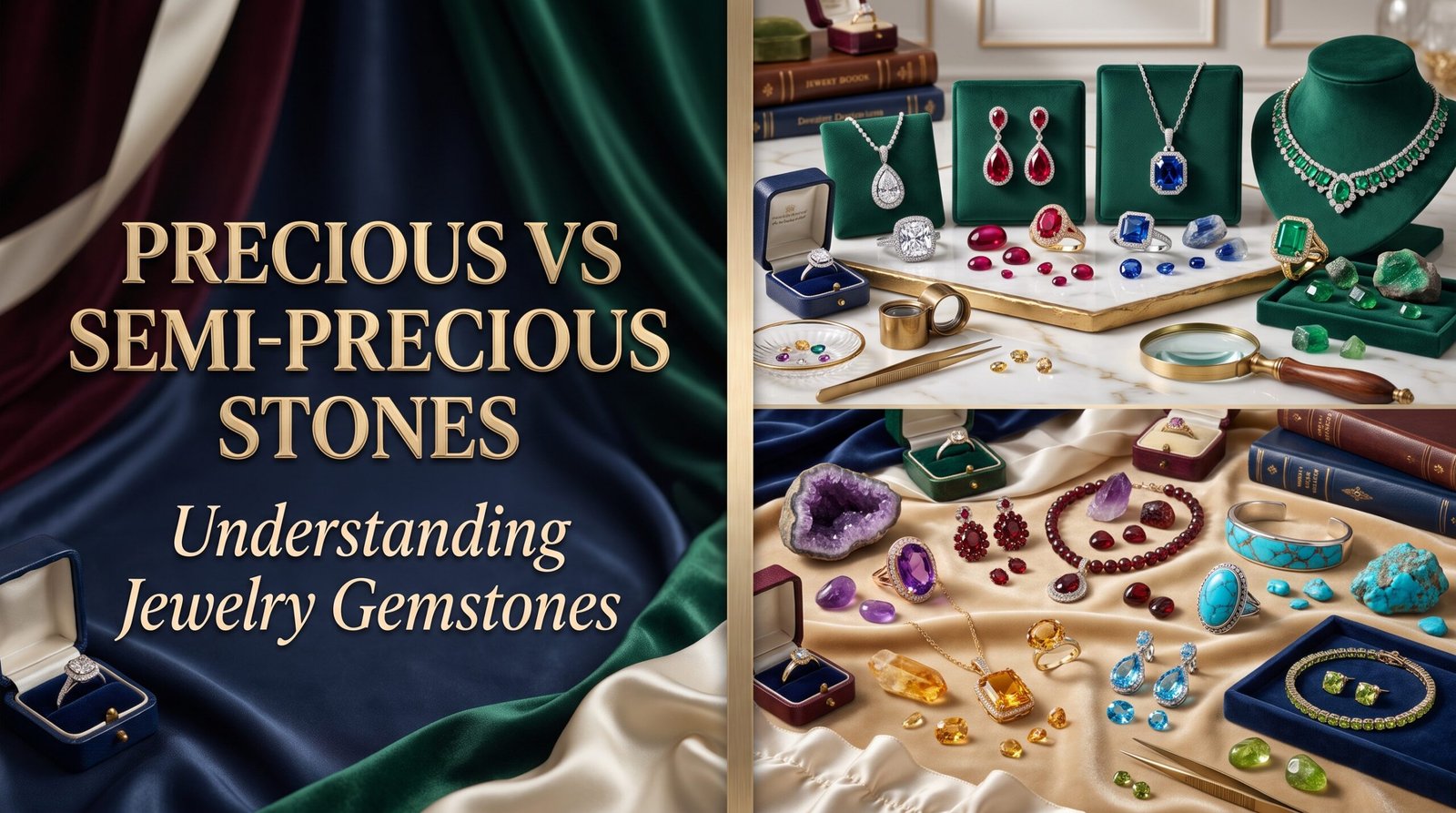
Someone tells you a stone is semi-precious. Immediately it feels lesser. Cheaper. Less valuable. That’s what the word does. Precious and semi precious stones. Two words creating massive assumptions. But here’s the thing, those classifications? Mostly outdated. Based on a historical accident. Market convenience. Not actual stone quality or durability.
Centuries ago gemstone categories made sense. Diamond. Ruby. Sapphire. Emerald. Those four gemstone types dominated. Everything else became “semi-precious” by elimination. Simple system. Worked for medieval traders. But modern jewelry? Modern science? They’ve exposed how flawed these categories actually are.
Understanding precious and semi precious stones matters enormously when shopping. Price reflects classification. Not necessarily reality. Some semi-precious natural gemstones outperform precious counterparts dramatically. Quality varies. Durability differs. Investment potential shifts. That gap between classification labels and actual stone properties creates confusion. Creates opportunities too.
Gemstone Types: The Traditional Classification System
Precious gemstone types. That’s what they called them. Diamond. Ruby. Sapphire. Emerald. Four stones. That’s it. Everything else? Semi-precious by default. Simple. Clean. Financially convenient for marketers.
The reasoning? Rarity. Durability. Hardness. Those gemstone types supposedly dominated those criteria. But the system ignored major exceptions. Tanzanite? Incredibly rare. More rare than diamonds actually. Semi-precious. Doesn’t make sense logically. Just market tradition continuing.
Gemstone type classifications also ignored availability differences across time periods. Medieval Europe? Rubies were semi-precious. Emeralds? Common. Classifications reflected what existed in specific regions. Not universal truths. Gemstone types therefore represented geographical luck. Historical accident. Not inherent stone properties.
Modern gemstone types classifications increasingly incorporate durability data. Scientific hardness measurements. Toughness ratings. Jewelry stones are evaluated differently now. More fairly. More accurately. But those traditional four precious gemstone types? They still dominate pricing and perception.
Understanding Gemstone Types Quality Grading
Gemstone type quality assessment involves specific criteria. Color saturation. Clarity. Cut quality. Carat weight. Jewelry stones evaluated using these metrics consistently. But standards differ between gemstone types. Diamonds graded differently than rubies. Standards reflecting stone characteristics specifically.
Clarity matters differently across gemstone types. Diamonds valued with minimal inclusions. Some ruby gemstone types valued specifically for silk inclusions. Jewelry stones are graded fairly only when considering type-specific standards. That nuance gets lost in general discussions.
Color represents different qualities across gemstone types. More saturation? Better for most. But some jewelry stones are actually valued for subtle tone variations. Gemstone types therefore require knowledge specific to each stone category. Blanket statements create misunderstandings constantly.
Natural Gemstones: Rarity and Authenticity
Natural gemstones command premiums. Justified? Sometimes yes. Sometimes marketplace manipulation. Lab-created stones duplicate natural gemstones chemically. Perform identically. But natural gemstones remain preferred. Tradition. Scarcity. Perceived authenticity. Natural gemstones therefore cost more regardless of practical differences.
Treatments of natural gemstones vary dramatically. Heat-treating? Standard practice. Filling? Sometimes disclosed. Sometimes not. Coating? Creating false appearances. Jewelry stones truth requires understanding treatments applied. Natural gemstones sometimes receive heavy treatments. Becoming almost synthetic while maintaining “natural” labels.
Certification matters for natural gemstones specifically. Documentation proving origins. Treatments applied. Natural gemstones with certificates carry credibility. Trust. Price premiums reflect that documented authenticity. Uncertified natural gemstones? Harder to verify. Harder to trust. Harder to value accurately.
Jewelry Stones: Durability as Primary Factor
Hardness determines wearability. MOHS scale measuring jewelry stones ability to resist scratching. Diamond scores 10. Ruby and sapphire? 9. Emerald? 8. Jewelry stones rank differently therefore requiring different protection. Different wearing expectations.
Toughness matters alongside hardness. Brittle stones crack. Break. Tougher jewelry stones withstand impacts. Emeralds? Brittle. Beautiful but fragile. Jewelry stones selection should consider actual lifestyle. Daily wear needs. Occasional wear purposes. Jewelry stones matching actual usage prevents frustration.
Jewelry stones durability determines long-term satisfaction ultimately. Hardness matters less than realistic toughness for wearers. Natural gemstones sometimes prove less durable than alternatives. Jewelry stones chosen should align with actual wearing conditions. Expectations matching reality prevent disappointment.
Conclusion
Precious and semi precious stones classifications matter less than understanding actual stone properties. Gemstone types require individual evaluation. Natural gemstones bring considerations beyond classification names. Jewelry stones selection benefits from an informed perspective about durability, rarity, and market factors.
At Bonnie Gemstones, gemstone types evaluation focuses on actual properties rather than outdated classifications. Understanding natural gemstones specifically. Durability assessment. Value determination. These factors matter more than category labels. Jewelry stones deserve thoughtful consideration beyond traditional precious or semi-precious designations. That’s how informed purchasing becomes possible.
FAQs
Why are some stones called precious and others semi-precious?
Traditional classifications labeled diamond, ruby, sapphire, emerald as precious. Everything else became semi-precious by default. Modern understanding recognizes this system as outdated. Gemstone types are actually based on rarity and durability, not classification names.
Are precious stones always better quality than semi-precious ones?
Not necessarily. Quality varies within all gemstone types. Some semi-precious natural gemstones exceed precious stone quality. Jewelry stones require individual evaluation regardless of classification.
Do natural gemstones always cost more than lab-created ones?
Generally yes. Natural gemstones command premiums. But chemically identical lab stones sometimes outperform natural gemstones. Value depends on preference and purpose.
Which gemstone types last longest in jewelry?
Durability depends on hardness and toughness combined. Diamonds and sapphires excel. But toughness matters equally. Jewelry stones selection should prioritize both factors for longevity.
Should I invest in precious stones or semi-precious alternatives?
Precious gemstone types appreciated predictably historically. But the market shifts constantly. Natural gemstones require research. Jewelry stones investments need understanding current market dynamics.