
What are the differences between precious and semi-precious stones?
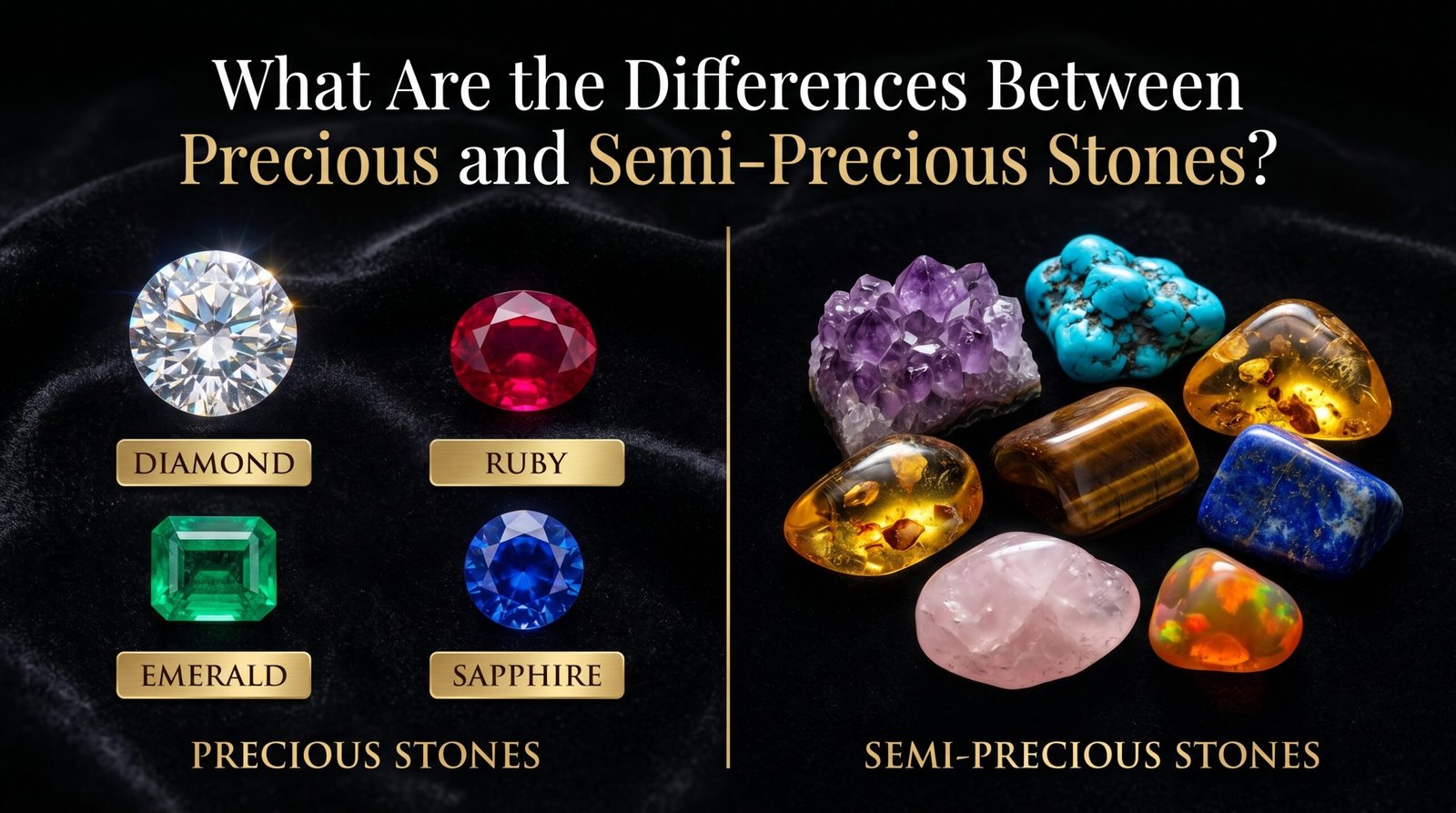
When people begin exploring gemstones, one of the most common questions that comes up is about the difference between precious and semi precious stones. These terms are widely used across jewelry and design, but they are often misunderstood or taken at face value without deeper context.
Traditionally, gemstones have been grouped into two categories based on rarity, historical value, and cultural significance. This is where the idea of precious stones vs semi precious stones comes from. However, in modern jewelry, this distinction is not as rigid as it once was. Today, the appreciation of a gemstone depends just as much on its individuality, natural variation, and visual presence as it does on its classification.
At Bonnie Gemstones, the focus is not simply on labels, but on how each stone expresses its character and how it contributes to the overall design of a piece.
What Are Gemstones?
Before understanding categories, it is important to understand what are gemstones.
Gemstones are naturally occurring minerals or organic materials that are valued for their beauty, durability, and uniqueness. They are shaped and used in jewelry not just because of their appearance, but because of the natural processes that form them over time. Each gemstone develops under specific environmental conditions, which is why no two stones are exactly alike.
This natural variation is what gives gemstones their individuality. The subtle shifts in tone, texture, and color are not imperfections, but rather the defining qualities that make each piece unique.
What Are Precious Stones?
To understand what are precious stones, we need to look at traditional classification.
Historically, only four gemstones have been categorized as precious: diamond, ruby, sapphire, and emerald. These stones were considered rare and valuable due to their durability, brilliance, and long-standing cultural significance.
For centuries, these gemstones were associated with wealth, royalty, and status. Their limited availability and visual clarity contributed to their elevated position in the world of jewelry.
However, this classification is based more on tradition than on modern standards of beauty or uniqueness.
What Are Semi-Precious Stones?
When asking what are semi precious stones, the answer includes all other gemstones that fall outside the traditional “precious” category.
This group includes stones such as amethyst, garnet, turquoise, opal, and tanzanite. While the term “semi-precious” may suggest something less valuable, that is not necessarily the case.
Many of these stones are admired for their rich colors, unique patterns, and natural variation. In fact, they often offer more diversity in appearance compared to traditionally precious stones.
The term itself is simply a historical way of grouping stones, not a direct reflection of their beauty or worth.
Difference Between Precious and Semi-Precious Stones
To better understand the difference between precious and semi precious stones, it helps to look at them side by side:
| Feature | Precious Stones | Semi-Precious Stones |
| Examples | Diamond, Ruby, Sapphire, Emerald | Amethyst, Garnet, Turquoise, Opal, Tanzanite |
| Classification | Based on historical rarity | Broad category including all other gemstones |
| Availability | Traditionally rarer | More widely available but still unique |
| Variety | Limited range | Wide range of colors and patterns |
| Visual Character | Often valued for clarity and brilliance | Valued for variation and individuality |
| Modern Use | Classic and traditional designs | Artistic and unique jewelry designs |
Why This Difference Matters Less Today
In today’s jewelry world, the distinction between categories has become less important than the experience of the piece itself.
Modern designs focus more on how stones interact with each other, how colors shift in different combinations, and how the overall composition feels. Instead of prioritizing classification, the emphasis has shifted toward individuality and artistic expression.
At Bonnie Gemstones, each necklace is created by observing how stones come together naturally. The design process is guided by the stones themselves rather than by whether they are labeled precious or semi-precious.
Choosing the Right Gemstone for You
When deciding between gemstones, the more meaningful approach is not to ask which category is better, but to consider what resonates with you.
Some people are drawn to the bold depth of ruby or sapphire, while others are more connected to the softer variation of stones like amethyst or turquoise. The right choice often comes down to personal preference, color harmony, and how the piece feels when you see it.
A gemstone is not just selected it is recognized. The connection you feel with a piece is often the most important factor.
A More Modern Perspective on Gemstones
The traditional labels of precious and semi-precious stones still exist, but they no longer define the full value of a gemstone. Today, individuality, variation, and design play a much larger role.
A gemstone’s worth is not only determined by rarity, but also by how it is used, how it is combined with other stones, and how it expresses its natural qualities.
This is what makes handcrafted gemstone jewelry stand apart it allows each stone to contribute to something unique
FAQs
1. What is the difference between precious and semi-precious stones?
Precious stones are traditionally limited to four types, while all other gemstones are categorized as semi-precious.
2. Are semi-precious stones less valuable than precious stones?
Not necessarily. Many semi-precious stones are highly valued for their color, rarity, and uniqueness.
3. Why are only four stones considered precious?
This classification comes from historical traditions based on rarity and cultural importance.
4. What are gemstones used for?
Gemstones are primarily used in jewelry and decorative designs due to their natural beauty and durability.