
Complete Guide to Red Gemstones: Ruby, Garnet, Carnelian & More
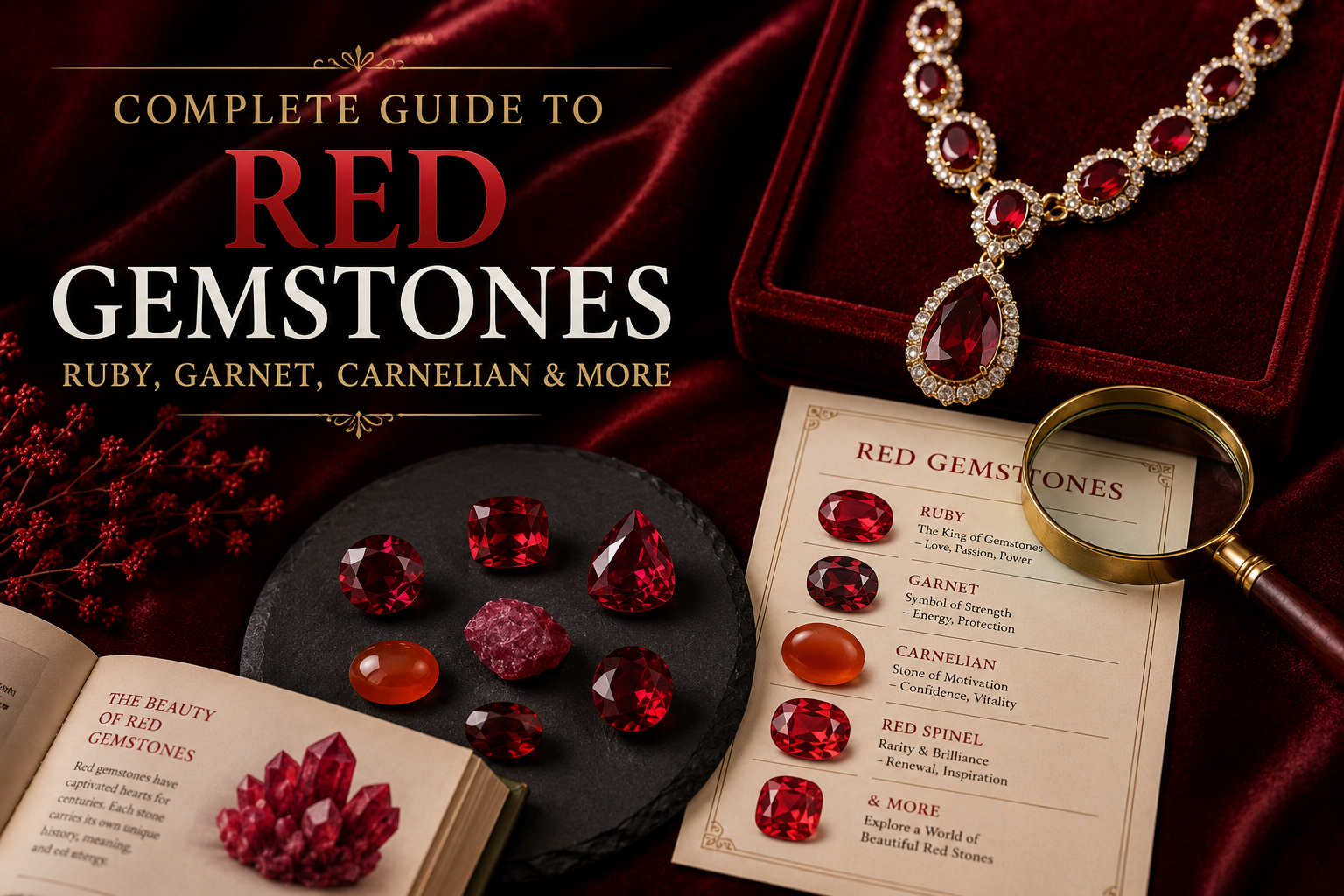
Red gemstones are stunning. There’s something about that deep crimson or warm glow that just pulls you in. Whether you’re hunting for red gemstones for jewelry or just curious about what’s out there, this guide breaks down the essentials, the popular stones, what makes them special, and how to pick the right one for you.
You’ve probably wondered, what’s the difference between a ruby and a garnet, anyway? Why does carnelian cost way less? These questions matter when you’re spending real money. The good news? Once you understand each gemstone, choosing becomes straightforward.
Types of Red Gemstones You Should Know About
Let’s start with the big ones. Types of red gemstones vary wildly. Each one has different properties, prices, and looks.
Ruby is what most people think of first. It’s corundum, colored by chromium. The best rubies? Burmese stones from Mogok have this deep “pigeon’s blood” red that collectors obsess over. But here’s the reality: Thai and Vietnamese rubies are gorgeous too, and they won’t drain your wallet. African rubies are getting better every year.
Garnet doesn’t get enough credit. The burgundy almandine garnets look almost like rubies when light hits them right. The pyrope variety from Eastern Europe? Brilliant red. You get that rich depth without the ruby price tag. Smart jewelry designers know this and feature garnets in contemporary collections.
Carnelian is the warm one. It ranges from orange-red to deep brownish-red. This is chalcedony, not as hard as ruby, but translucent in a way that’s beautiful. Ancient Egyptians loved it, wore it as jewelry and talismans. Modern people choose carnelian because of that glow when light passes through.
Then there’s Red Tourmaline and Red Spinel. These are less common, which appeals to people wanting something distinct. Burmese spinels are incredibly clear with vibrant red. Tourmalines offer variety. Both attract collectors who don’t want the same stone everyone else has.
Red Stone Meaning: Why These Gems Matter Beyond Looks
Here’s where it gets interesting. Red stone meaning isn’t just spiritual, these associations run deep across cultures.
Ruby means passion. Courage. Life force. Hindu traditions called rubies “ratnaraj” king of precious stones. Warriors literally embedded rubies in their skin thinking it made them invincible. Western culture? Rubies equal deep love and commitment. That’s why they’re on so many engagement rings.
Garnet symbolizes protection and grounding. The name comes from pomegranate seeds, those little red gems. People wear garnets to feel centered, protected from bad energy, connected to something real. It’s about renewal.
Carnelians are different. It’s about confidence. Vitality. Creative expression. Ancient cultures used it to inspire courage and push past self-doubt. It’s the stone for stepping into your power.
Do these meanings actually work? Some people swear by it. Others treat red stone meaning as a nice bonus to owning something beautiful. Either way, having that deeper connection to your jewelry makes it matter more.
Gemstone Necklace: Making It Work
A gemstone necklace in red works for basically everything. Afternoon coffee date? Evening gala? Both. The trick is finding which red gem suits you.
Warm skin tones? Carnelian and lighter reds look incredible. Deeper skin? Ruby’s intensity creates stunning contrast. Garnet works across the board. And the metal matters, gold amplifies warmth, white gold creates a modern edge.
The gemstone necklace designs range from simple single pendants to elaborate statement pieces. Some people layer multiple chains of different lengths. That works now. A classic single stone in a vintage setting? Never goes out of style. There’s no wrong choice, really. It comes down to what makes you feel like yourself.
What Buyers Really Want to Know
Cost matters. Ruby costs more, often way more than garnet or carnelian. If the budget is tight, garnet delivers serious beauty without serious pain to your wallet. The quality is there.
Durability? Ruby wins again at 9 on the Mohs scale. Garnet sits around 7-7.5. Carnelian is 7. For everyday wear, they’re all solid. Ruby just lasts longer under heavy use.
Treatment is standard. Most rubies are heated to enhance color and clarity. This is normal, accepted, expected. Get certification from a reputable lab. Untreated stones cost significantly more and should come with documentation.
Conclusion
Red gemstones offer real value if you know what you’re looking at. Maybe you’re drawn to ruby’s prestige. Maybe Garnet’s beauty and affordability appeal more. Carnelian’s warmth might be your thing. When you’re ready to invest in a red gemstone necklace or any red gemstone jewelry, focus on authenticity and quality over trends.
Bonnie Gemstones specializes in sourcing premium red gems with complete transparency, you know exactly where your stone comes from and what you’re getting.
FAQs
Which red gemstone is toughest for everyday wear?
Ruby scores highest at 9 on Mohs hardness. Garnet and carnelian both work for regular wear though, they’re durable enough. Rubies just resist scratches better over decades.
How do I know if a red stone is natural?
Most rubies get heat treatment, standard practice. Request GIA certification. Untreated stones cost way more and should come with documentation proving it.
Why are red gemstones so pricey?
Quality rubies command premium prices. Garnet and carnelian cost less but still deliver stunning beauty. Pick based on budget and what speaks to you.
What metal should I pair with red gems?
Yellow gold, rose gold, white gold, all work. Choose what flatters your skin tone and matches your style. There’s really no “wrong” answer here.
How do I keep red gemstone jewelry looking good?
Lukewarm water and mild soap. Avoid extreme temperature changes and harsh chemicals. Store separately from other jewelry. Get professional cleaning once a year to keep the shine.