
What are the differences between precious and semi-precious stones?
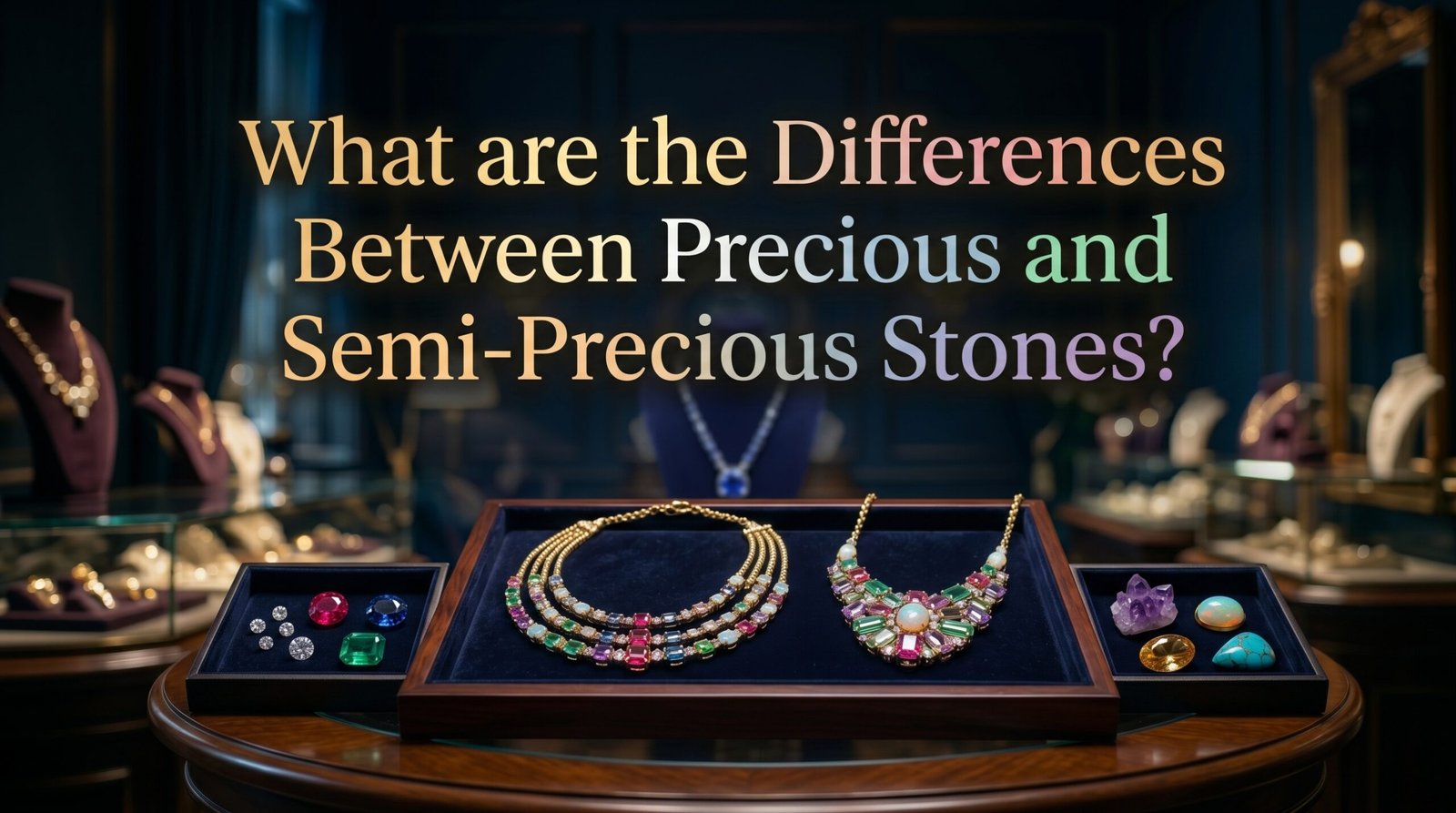
When people start exploring gemstones, one of the first questions that comes up is the difference between precious and semi precious stones. The terms sound simple, but the reality behind them is more complex than most people expect. Traditionally, gemstones were divided into categories based on rarity, value, and cultural importance. However, modern gemology shows that these classifications are not always as clear as they seem.
In today’s jewelry world, especially in handcrafted semi precious stone jewelry, the focus has shifted from strict labels to individuality and natural variation. At Bonnie Gemstones, each piece is designed around this idea the beauty of a stone is not defined by its category, but by its character and how it interacts within a design.
What Are Gemstones?
To understand the comparison, it is important to first define what are gemstones.
Gemstones are naturally occurring minerals (and sometimes organic materials) that are cut and polished for use in jewelry. Their value comes from a combination of factors, including color, clarity, durability, and rarity.
Each gemstone forms under unique geological conditions, which is why no two stones are exactly alike. This natural variation is what gives gemstone jewelry its depth and individuality.
What Are Precious Stones?
When asking what are precious stones, the answer traditionally includes only four gemstones:
- Diamond
- Ruby
- Sapphire
- Emerald
These stones were classified as “precious” because of their rarity, durability, and historical importance.
For centuries, these gemstones were associated with wealth and status. Their hardness and brilliance also made them ideal for long-lasting jewelry. However, this classification is largely based on tradition rather than modern scientific standards.
What Are Semi Precious Stones?
To understand what are semi precious stones, we look at all other gemstones outside the traditional four.
This category includes stones such as amethyst, garnet, turquoise, opal, and tanzanite. While they are labeled “semi-precious,” this does not mean they are less beautiful or valuable.
In fact, many semi-precious stones are prized for their color variation and uniqueness. Some can even be rarer than traditionally precious stones, showing that the classification is not always accurate.
This is why modern jewelers often focus more on design and quality rather than labels.
Precious Stones vs Semi Precious Stones (Clear Comparison)
To better understand precious stones vs semi precious stones, here is a simplified comparison:
| Feature | Precious Stones | Semi-Precious Stones |
| Examples | Diamond, Ruby, Sapphire, Emerald | Amethyst, Garnet, Turquoise, Opal |
| Classification | Traditional “elite” category | All other gemstones |
| Rarity | Generally rare (historically) | Can range from common to rare |
| Variety | Limited | Very wide range |
| Value | Often higher (but not always) | Depends on rarity and quality |
| Modern Perspective | Traditional importance | Increasingly preferred for unique designs |
Why the Difference Is Less Important Today
The distinction between categories is becoming less relevant in modern jewelry design.
Gemologists now emphasize that the terms “precious” and “semi-precious” are not scientific and can even be misleading.
Some semi-precious stones are rarer and more valuable than diamonds, which challenges the traditional hierarchy. This shift has changed how people view gemstones.
Instead of focusing on labels, designers now prioritize:
- natural variation
- color interaction
- artistic composition
At Bonnie Gemstones, this approach defines every piece. The focus is on how the stones come together, not what category they belong to.
The Role of Handmade Jewelry in This Comparison
In handcrafted semi precious stone jewelry, the importance of classification becomes even smaller.
Handmade jewelry emphasizes individuality rather than standardization. Semi-precious stones are often preferred because they offer more variation in color and structure, making each design unique.
This allows for more creative freedom. Instead of working with a limited set of “precious” stones, designers can explore a wider range of materials.
The result is jewelry that feels more personal and less repetitive.
Choosing Between Precious and Semi-Precious Stones
When choosing jewelry, the better question is not which category is superior, but which piece feels right.
Some people prefer the clarity and brilliance of traditional precious stones. Others are drawn to the variation and depth of semi-precious stones.
The choice often depends on:
- personal connection to color
- natural variation in stones
- overall design composition
This is why many people today are choosing semi-precious gemstone jewelry it allows for more individuality.
A Modern View on Gemstone Value
Gemstone value is no longer defined solely by classification. Factors such as rarity, quality, origin, and design all play a role.
For example, certain semi-precious stones can be more valuable than traditional precious stones due to their rarity.
This shows that the old categories are not always reliable indicators of value.
At Bonnie Gemstones, the emphasis is on creating jewelry that reflects individuality rather than hierarchy. Each piece is designed to highlight the natural beauty of the stones, regardless of classification.
FAQs
What is the difference between precious and semi-precious stones?
Precious stones include diamond, ruby, sapphire, and emerald, while all other gemstones are classified as semi-precious.
Are semi-precious stones less valuable?
Not always. Some semi-precious stones can be rarer and more valuable than traditional precious stones.
Why are only four stones considered precious?
This classification is based on historical traditions related to rarity and cultural importance.
What are gemstones used for?
Gemstones are used in jewelry because of their beauty, durability, and natural variation.